According to the General Household Survey (GHS) 2025, Christianity’s share of Singapore’s resident population fell from 18.9% in 2020 to 17.1% in 2025. This is the first recorded decline after four decades of growth.
The sharper detail, however, lies beneath the headline. While the number of Catholics increased, the Protestant population fell from 11.9% to 9.5%, a decline of nearly 66,000 people.
Although there has been a decline across every age group, the steepest drop is among those aged 15-19 and 20-24. More concerning is that these younger age groups have been declining in percentage terms since 2010.
The older age groups have also declined, but much of that can be attributed to believers being called home to the Lord.
Much has already been written about the present trend, and one recent research paper offers both an explanation for the decline and practical recommendations for local churches if we hope to arrest it – https://sgforchrist.github.io/GHS26/#grace
I would like to reflect on our own congregation in light of these findings and consider how we might do better as Christ’s church.
The research identifies five key reasons for Christianity’s decline.
1. Theology: A faith not built to withstand testing
If our teaching merely makes people feel good – preaching what their “itching ears” want to hear – then when failure comes, when health deteriorates, or when life takes an unexpected turn, their faith is easily shaken because it has never been firmly anchored in the Word of God.
At True Way, we seek to address this by preaching systematically through the Scriptures. We have completed preaching through the New Testament and have begun a new cycle, while continuing to work steadily through the Old Testament.
We do not avoid passages that make us uncomfortable. We preach repentance and the call to take up our cross, just as we preach God’s sovereignty, mercy and grace. Our desire is to provide the whole counsel of God so that our congregation may know who God is and what He has called us to be.
One area where we can continue to grow is helping Truewayians see the relevance of God’s Word amid the complex challenges of twenty-first-century life. Sound doctrine must not only be understood; it must also be lived.
2. Culture: When meritocracy seeps into the home and the church
As the saying goes, “Values are better caught than taught.”
Pastor Guna Raman observes that many children hear one gospel in church and another at home. In church they are taught that Christ is Lord; at home, grades, careers and financial security often become the greater priorities.
As parents, we must ensure that the liturgy of our homes does not contradict the liturgy of Sunday worship.
Even during examination periods, bringing our children to church teaches them that Christ is not merely one priority among many, but the Lord over every area of life.
We should also ask ourselves whether our church culture has become so achievement-oriented that it appears our standing before God is based on performance rather than grace.
Do we celebrate only success stories? What if we also share our struggles, failures and God’s sustaining grace? Such testimonies become even more powerful when pastors and leaders are willing to be transparent. This helps cultivate a church culture where people need not hide their weaknesses but can instead bear one another’s burdens.
If church life is truly grace-based rather than performance-based, then we should also encourage people to take a season of rest from serving when necessary. At the same time, leaders must responsibly identify and train others to step into those ministries so that the work continues.
Yet our hope is not that people rest permanently. Serving remains a spiritual discipline and a means of grace through which God shapes us. During these seasons of rest, pastors and leaders should continue to extend pastoral care so that no one feels forgotten once they stop serving.
3. Leadership: A two-way failure to trust the other generation
Sometimes older members assume that younger believers lack sufficient experience or wisdom to lead. At the same time, younger believers may dismiss older generations as outdated or resistant to change, prompting them to leave for other churches with a younger profile of congregants.
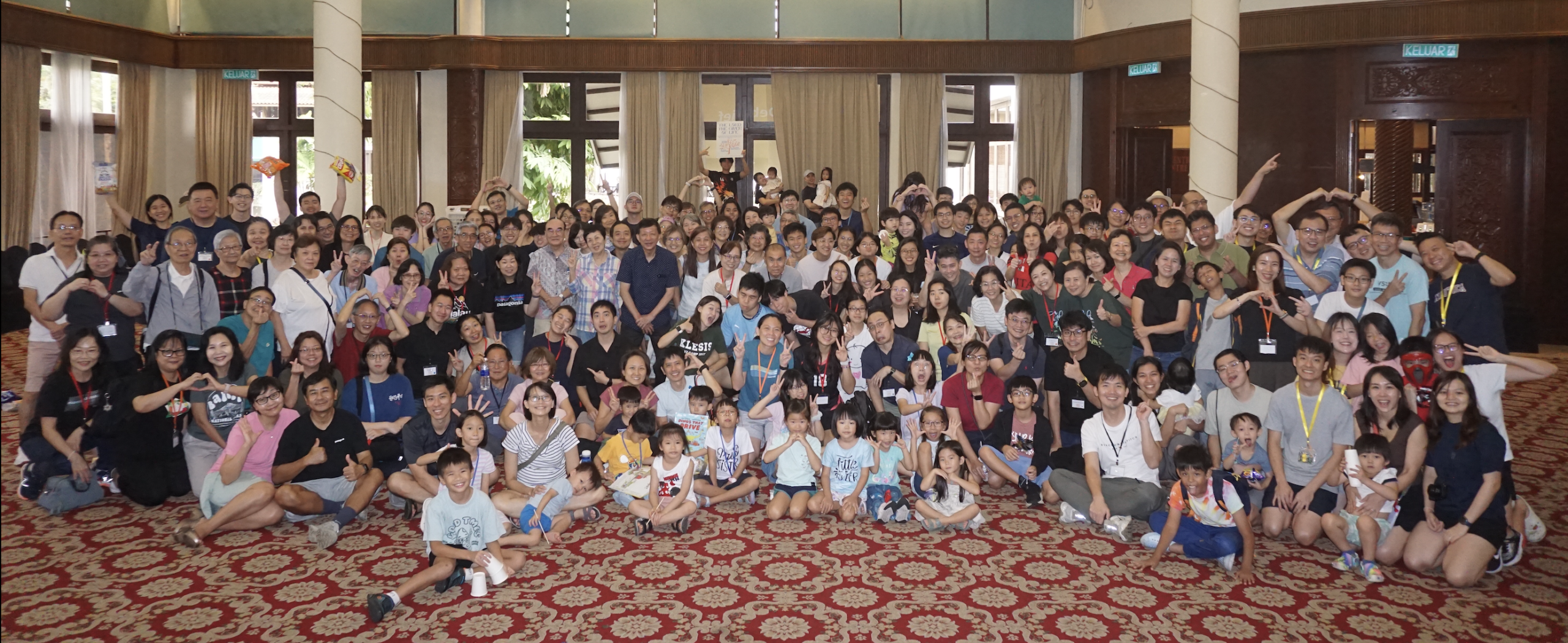
Since 2022, True Way has intentionally emphasised building intergenerational trust. We encourage younger and older members to serve together. The older generation offers wisdom and mentoring, while the younger generation contributes fresh perspectives and technological fluency.
I thank God that many Millennials have stepped forward to serve as deacons. However, we continue to face challenges encouraging more members from Gen X to consider eldership. My hope is that our Elders and Deacons Court (EDC) will increasingly reflect the strength of multiple generations serving side-by-side.
4. Structure: Silos that prevent integration
I am thankful that we have gradually moved away from a model in which every age group functions largely in isolation (i.e. U12, YZ, YAM, adults). While age-based ministries remain important, children and young people also need relationships with believers of different generations so that they can experience the church as one family.
I am encouraged by the many young parents who faithfully bring their babies and toddlers to worship and entrust them to the loving care of brothers and sisters in the church.
From an early age, children learn that worshipping God is central to life. Research by Barna also suggests that young people who develop relationships with at least five significant adults in church are much less likely to drift away from the faith.
The transition into National Service, university and the workplace remains a particularly vulnerable season. The demands are significant, and the distractions are many.
One way we can help is through intentional discipleship – walking alongside one, two or three younger believers, helping them develop biblical convictions about priority, identity and purity.
If they learn to seek first God’s kingdom, to find their self-worth in Christ rather than their achievements, and to pursue holiness because they belong to Christ, they will be better equipped to navigate these transitions faithfully.
5. The familial and wider social context
Many Christians in Singapore are second-generation believers whose faith has not yet become deeply personal.
This highlights the importance of family discipleship. Regular family devotions matter. Even when parents are tired or children seem uninterested, perseverance bears fruit over time.
Equally important is the spiritual health of parents themselves. If parents are not being discipled, how can they disciple the next generation? If parents’ faith grows lukewarm, it should not surprise us if their children eventually abandon the faith altogether.
At the same time, changing cultural attitudes towards pluralism, sexuality and gender, particularly among younger Singaporeans, present real pastoral challenges.
The church must be prepared to respond to these issues with both conviction and compassion. We must teach our members how to articulate and defend the Christian faith graciously and respectfully. That is one reason our Evangelism Committee has prepared a handbook to provide practical guidance in engaging these conversations.
A concluding encouragement
Judging from the research paper, I believe that, by God’s grace, True Way is moving in the right direction. Nevertheless, there is always room to grow, and we should continue striving to become a healthier church.
At the same time, we must remember that even this pursuit is grounded in grace. We are not seeking to earn God’s favour through better programmes or greater effectiveness. Rather, the Holy Spirit empowers us to grow in faithfulness. Even when our efforts seem small or our progress slow, our salvation remains secure in Christ. God does not measure us primarily by our success but by our faithfulness.
Statistics may reveal a trend, but they do not determine the future. Christ Himself has promised to build his Church, and our confidence ultimately rests not in our strategies but in His sovereign faithfulness.