One of the American Founding Fathers, Benjamin Franklin (1706–1790), once said these famous words: “… in this world nothing can be said to be certain, except death and taxes.”[1]
While taxes are a matter for fiscal policy, death is a certainty we must all face—which raises an important question: how should our bodies be treated after we die? Because mortality is a universal experience, this topic touches everyone. [2]
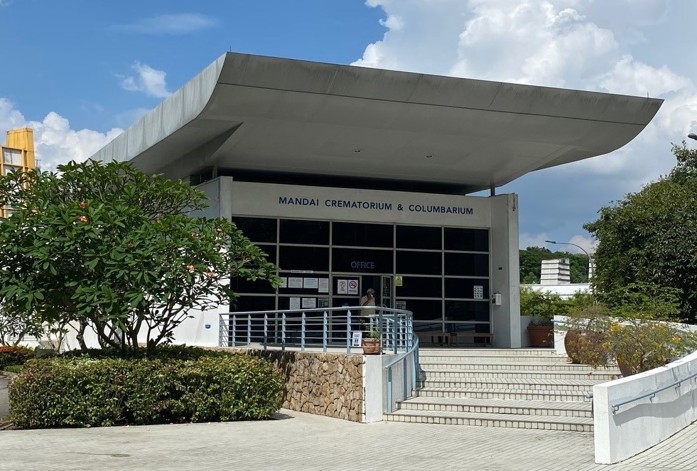
Even if we aren’t particularly concerned about our own remains, we naturally care about how we honor our loved ones. In fact, many of us have already chosen cremation for deceased family members—but is that okay? This perspective explores this very question, especially since, in Church history, cremation has sometimes been discouraged or even explicitly forbidden.
And so the question we are considering here is:
Is it ok to cremate?
To spare us the unnecessary suspense, perhaps I should say from the outset:
Yes, it is ok to cremate.
Here’s why:
Biblical Considerations
To begin with, we should note that nowhere in the Scriptures is burial commanded and cremation forbidden. Nonetheless, in the Old Testament, the most common treatment of the deceased body is that of burial.
The pattern begins with the patriarchs, who secured the cave of Machpelah in the Promised Land for family burials (Genesis 23:4; 25:8-9) – this was an act expressing faith that God will indeed give the land as He promised. Later the Law of Moses required prompt burial for all: “you shall bury him the same day, for a hanged man is cursed by God” (Deuteronomy 21:22-23). In the ancient near east, when the dead were not buried but burnt, this was generally seen as an abnormality and a desecration of the human being (1 Kings 13:2; 2 Kings 23:16, 20; Amos 2:1). Proper burial was thus portrayed as the norm and an important ritual to honor the dead, emphasizing human dignity and enduring family bonds.
One exception is that of the bodies of King Saul and his sons. To prevent the Philistines from desecrating their bodies, valiant Israelites rescued the corpses, burned them, and respectfully buried the bones (1 Samuel 31:12-13). This was seen as a noble act to protect the bodies from further dishonour, proving that fire is not inherently a desecration of the dead in Scripture.
Historical Considerations
Later, this general Jewish practice of burial was naturally adopted by the first Christians.[3]
What probably provided further impetus for the practice of burial is the fact that burial served as a means to affirm the goodness of material creation. At that time, some Greco-Roman worldviews viewed the physical body as a prison for the soul, expressing this doctrine in the practice of cremation. Against this notion, Christians buried their dead to affirm that the physical human body is inherently good and capable of redemption.
Aware of this, during early church persecutions, Roman authorities often burned martyrs and scattered their ashes to prevent their resurrection. In AD 177, persecutors explicitly claimed this would ensure the martyrs had “no hope of a resurrection.”[4] They were gravely mistaken. Early Christians maintained that no earthly fire could ever hinder God’s power to resurrect the dead.
One early Christian writer, writing around AD 200, explained that Christians did not fear cremation out of a belief that it stopped resurrection, but preferred burial as a comforting, traditional symbol.[5] In other words, it was a historically specific expression of the Christian belief in the bodily resurrection, not a decision that could materially affect the eternal outcome of the deceased.
That said, if burial was generally preferred, how did cremation become so common?
Fast-forward to 1874: amid the public health crises of the Industrial Revolution, Queen Victoria’s surgeon, Sir Henry Thompson, founded the Cremation Society of England. He argued that cremation was a vital sanitary precaution to prevent disease from spreading through corpses.
As the practice modernized, European secularists began using cremation specifically to mock the Christian dogma of bodily resurrection. Consequently, the Vatican banned cremation, seeing it as a defiant rejection of the faith. This ban held until 1963, when shifting cultural contexts prompted the Vatican to reverse its stance. The Church clarified that cremation “does not affect the soul nor prevent God’s omnipotence from restoring the body”.[6]
What I hope is clear from this brief sketch is that cremation was never prohibited or discouraged because it could cause harm to the deceased. When it was prohibited in the Christian tradition, it was done so with consideration of what it communicated to others at that point in time.
Main Theological Consideration
What is key here is that God is omnipotent. He created all things out of nothing and he created human beings out of scattered dust (Genesis 2:7). Whether we are cremated or buried, our bodies will all decompose over time: For you are dust, and to dust you shall return (Genesis 3:19). The speed of decomposition is immaterial.
Our faith is in the one who raised Christ from the dead (Romans 4:23-25, Romans 10:9, 2 Corinthians 1:9, 1 Peter 1:21) not in the specific mechanisms of how our corpses are handled.
So how about today, what is the symbolic significance of choosing one over the other?
As far as I can discern, it seems to me that insisting on burial in 21st century Singapore does not necessarily offer a stronger Christian witness. The cultural symbolism of cremation has shifted. It is no longer viewed as a desecration of the deceased or a denial of bodily resurrection. Instead, in our land-scarce context, choosing cremation can be seen as a thoughtful gesture of stewardship for future generations. But I think for most people, it is simply a neutral practice accepted without a second thought.
What matters is that we continue to bear witness to our living God and our living hope through our communal grieving, living and burden-carrying.
[1] He was writing to his friend about the newly established United States Constitution,
[2] Unless, of course, Christ comes back while we are alive c.f. 1 Thess 4:15-17.
[3] The Roman historian Tacitus observed that it was a distinct Jewish custom to “bury rather than burn their dead”.
[4] Letter of the Churches of Vienne and Lyons from Eusebius’ Ecclesiastical History 5.1.62-63
[5] The early Christian apologist Minucius Felix defended this in his work Octavius: “Nor do we fear, as you suppose, any damage from cremation, but we adopt the ancient and better custom of burying in the earth.”
[6] An Instruction from the Vatican called Piam et Constantem (May 8, 1963)