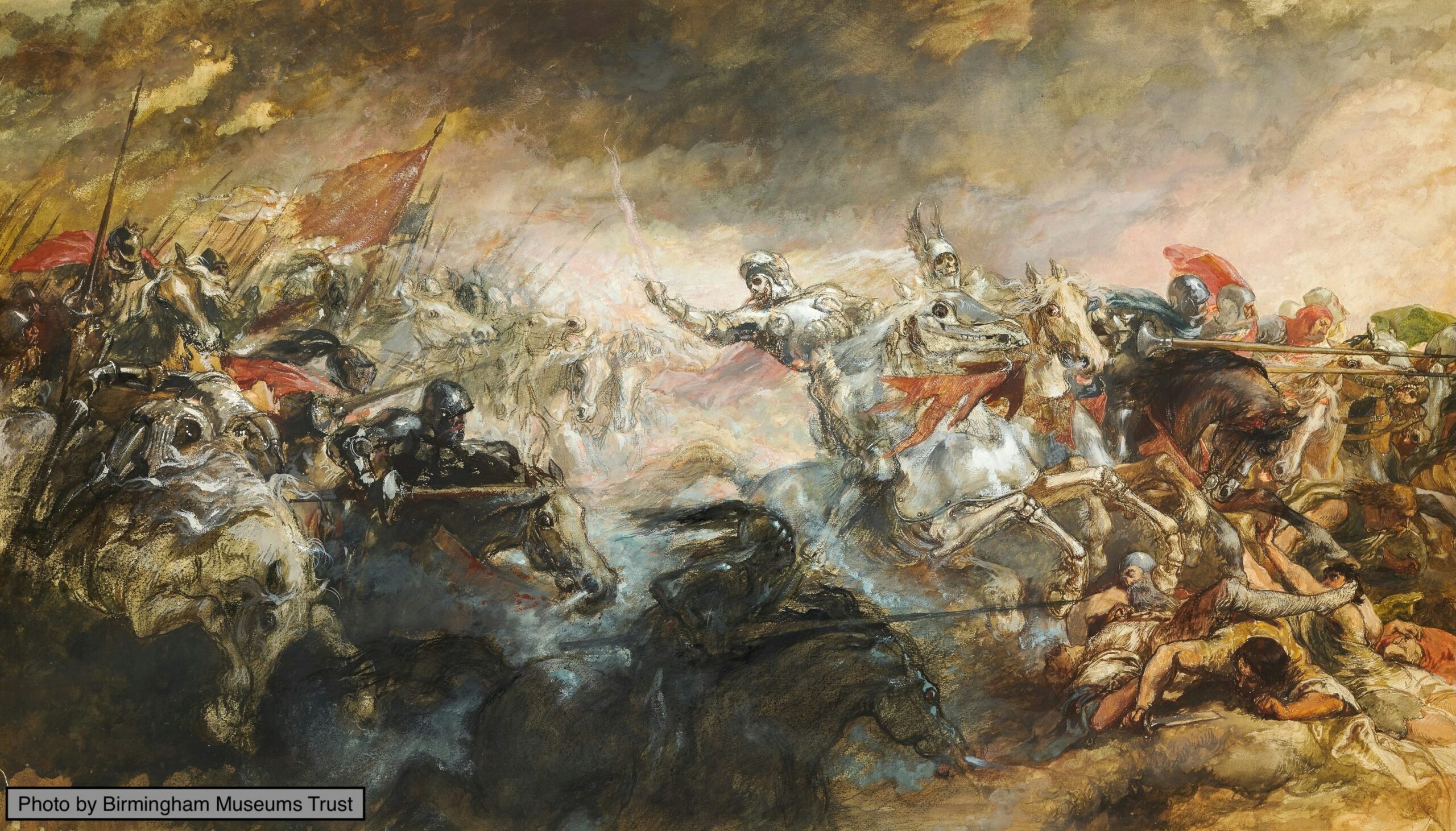
It began with the Russia–Ukraine war, followed by the Israel–Hamas war, and more recently, the tensions involving the U.S./Israel and Iran. There are certainly conflicts in other parts of the world, but since the media has highlighted these three, let us take a closer look at them.
In war, we often assume there is a clear aggressor and a victim. Yet complex global conflicts rarely fit into such simple categories. Each side has its own story to tell, its cause to defend, and its reasons for going to war.
In the case of the Russia–Ukraine war, tensions escalated as Ukraine moved closer to the EU and NATO. In 2014, Russia annexed Crimea and supported separatists in eastern Ukraine. In February 2022, Russia launched a full-scale invasion.
President Vladimir Putin claims that NATO expansion threatens Russia’s security and frames the war as protecting Russian-speaking populations. He views Ukraine’s drift toward Western influence as unacceptable.
Ukraine, however, sees the invasion as a clear violation of its sovereignty and international law. It seeks to preserve its independence and democratic alignment with Europe and continues to defend its territorial integrity.
The Israel–Hamas war is rooted in the broader Israeli–Palestinian conflict over land, identity, and statehood. Hamas, which governs Gaza and is designated a terrorist organisation by many countries, launched attacks into Israel in October 2023, killing civilians and taking hostages. Israel responded with large-scale military operations aimed at dismantling Hamas.
Hamas does not recognise Israel as a state and views its actions as resistance against Israel’s occupation and blockade. Israel, on the other hand, sees Hamas as an ongoing existential threat that must be removed, justifying its military actions as self-defence and hostage recovery. Meanwhile, Palestinian civilians in Gaza have suffered immense hardship –bombardment, displacement, and a deepening humanitarian crisis.
As for U.S./Israel–Iran tensions, hostility has persisted for decades. Iran positions itself as resisting Western and Israeli dominance and insists its nuclear programme is peaceful. The U.S. and Israel, however, fear that Iran may develop nuclear weapons and view its regional influence and proxy networks (e.g. Hamas, Hezbollah) as destabilising.
So who is right and who is wrong? It is not always easy to tell.
Pacifists reject war entirely because of its devastating human cost—lives lost, families torn apart, homes destroyed, and countless people displaced. Others support war in the name of justice, yet each side defines justice on its own terms and is willing to fight for its people, land, and future.
For those of us far removed from these realities, we may wonder how we should pray. Do we pray for one side to prevail, especially if we have already decided who is at fault? But can we be so certain that our perspective is the only right one?
I find a line from the Lord’s Prayer helpful: “Your will be done on earth as it is in heaven.”
Before we become disheartened or disillusioned by world events, we should remember that we live in a fallen world. War has always been a present reality in human history. Devastation and death are part of the brokenness brought about by sin. Yet even in the midst of such darkness, God is at work—establishing His kingdom and filling the earth with His glory.
How so? The Gospel is advancing. In war-torn regions, people on all sides are coming to faith in Jesus.
Fares Abraham, a Palestinian Christian leader, once shared the stage with Aaron Abraham, CEO of Jews for Jesus. One is Palestinian, the other Jewish – yet both are united in Christ. Aaron said:
“Fares and I have both suffered deep losses because of the conflict between our peoples. We have each experienced the pain and fear carried by our communities for generations. We do not agree on every reason behind the conflict or how it should be resolved. Yet we love one another as brothers in the Lord, and we care deeply about each other’s communities.
We stand together because we see what Jesus sees on both sides of this conflict: people who desperately need the hope of the Gospel. More than anything, both communities need to experience God’s transforming love and forgiveness so they can learn to love and forgive one another.
Since the horrific terrorist attacks in Israel on 7 October 2023, the world has been flooded with images, accusations, and fear. It is easy to absorb the bitterness of one side or the other. Yet in the middle of this darkness, God is still at work.
Our missionaries in Israel have witnessed hearts softening among Jewish people in ways I can only describe as miraculous. Fares has seen God moving among the Arab communities with the same power and tenderness. When we share our stories, we realise that what the world describes only in terms of conflict, God approaches with compassion. What the world sees through the lens of enemies, God sees through the eyes of redemption.”
In Revelation 11, the two witnesses – symbolic of the Church’s prophetic witness – prophesy in a hostile environment, are opposed and killed, and their deaths are even celebrated. Yet they are ultimately vindicated and raised by God.
This reminds us that God always preserves a witness. The Gospel is never silenced. Opposition – even violent opposition – cannot ultimately thwart God’s purposes. What appears to be defeat may, in fact, be the very means by which His truth spreads.
Even amid war and chaos, God ensures that His Word continues to be proclaimed. Though the Church may suffer and appear weak, its witness endures and will ultimately be vindicated.
We cannot control what is happening in the world, but we are not without purpose. The same God who sustains His witness in the midst of global conflict calls us to be faithful witnesses where we are. If we cannot go to war-torn lands, we can go to wounded hearts. If we cannot go far, we can go near – to our neighbours, colleagues, friends, and family members who are anxious, hurting, or searching for hope.
In a world marked by conflict and confusion, will we carry the message of reconciliation? Will we bear witness to Christ with humility and courage? As we continue to pray, “Your will be done on earth as it is in heaven,” may we also commit ourselves to being part of how God answers that prayer – faithful, present, and steadfast in proclaiming the hope of the Gospel.